
very blogger dreams of waking up and seeing thousands of visitors on their website overnight. No paid ads. No backlinks campaign running. Just pure organic traffic flowing in. That’s exactly what happens when your content gets picked up by Google Discover. But here’s the reality most website owners don’t even understand how Google Discover works, let alone how to get traffic from it.
In 2026, Google Discover traffic is no longer luck-based. It’s strategy-based. Google is no longer just ranking websites on keywords it is ranking based on user behavior, interest signals, content freshness, authority, and engagement. If your content aligns with what users are interested in at the right time, Discover can send massive traffic even if your website is new.
I’ve seen websites with low domain authority explode with traffic because they understood how Discover works. And I’ve seen established websites fail because they ignored user intent and content quality. In this guide, I’ll break down exactly how to get Google Discover traffic in 2026 practically, strategically, and without relying on myths.
What Is Google Discover and How It Really Works
Google Discover is not a search engine result page. It is a personalized content feed shown inside the Google app and mobile Chrome. Users do not type keywords. Google shows content based on their behavior, interests, browsing history, location, and engagement patterns.
This is very important to understand.
Search is demand based.
Discover is interest based.
In search, a user asks a question.
In Discover, Google predicts what the user might like next.
That means your content is not competing only on keywords. It is competing on attention.
Discover uses machine learning models connected with user interest graphs. If someone reads technology articles frequently, Google pushes more tech content. If someone engages with finance news, finance content increases in their feed.
Because of this, Discover traffic can explode suddenly and disappear suddenly.
That is not a bug. That is how it is designed.
Why Google Discover Traffic Explodes and Drops
Most bloggers do not understand this part.
Discover works in waves.
When you publish a strong article, Google tests it with a small audience batch. If users click, stay longer, and engage, Google increases distribution. If engagement drops, distribution stops.
That is why you may see:
• 50,000 impressions in 24 hours
• Then zero the next week
This is normal.
Discover rewards content that performs well in real time. It does not guarantee long term placement like search rankings.
So your strategy must focus on engagement signals, not just publishing.
Core Ranking Signals in Google Discover 2026
1. User Engagement
Google tracks:
• Click through rate
• Dwell time
• Scroll depth
• Interaction signals
• Negative feedback such as hide story
If users click and leave in five seconds, Discover reduces visibility. If users stay, scroll, and read fully, reach increases.
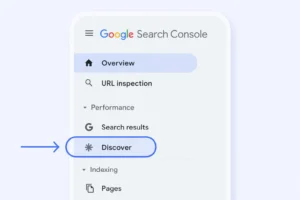
You can monitor Discover data inside Google Search Console under the Discover tab.
2. E E A T Signals
Google values Experience, Expertise, Authoritativeness, and Trustworthiness.
This is connected with overall site reputation and topical consistency.
Author bio
Clear about page
External references
Consistent niche publishing
These all strengthen your Discover eligibility.
3. Content Freshness
Discover prefers fresh content, especially in:
Technology
Finance
Health
Entertainment
Sports
Trends
Adding updated statistics, new insights, and current angles improves performance.
4. Visual Quality Requirements
Discover is highly visual.
Google recommends:
• Images at least 1200 pixels wide
• High quality real visuals
• No blurry thumbnails
• No logo as main image
To allow large image previews, use the max image preview large setting.
Strong visuals increase click through rate dramatically.
Content Types That Perform Best in Discover
Most competitors only say trending topics. That is incomplete.
Based on behavioral analysis, these content types perform best:
1. Explainer Articles
Example: Why something is happening now.
2. Industry Predictions
Example: What will change in 2026.
3. Breaking Commentary
Quick expert reaction to new events.
4. Opinion With Authority
Not random opinion. Structured insight.
5. Data Backed Insights
Charts, case analysis, statistics.
Discover users scroll for interest, not homework style guides.
Make content engaging, current, and valuable.
Psychological Headline Engineering
Most people say write strong headlines. That is not enough.
Discover is a scrolling environment.
Your headline competes visually with dozens of other articles.
Effective patterns include:
Authority framing
Time sensitivity
Clear benefit
Curiosity without clickbait
Bad example:
SEO Tips for Beginners
Better example:
Why Most SEO Strategies Fail in 2026 and What Actually Works
Do not use fake clickbait. Discover users can hide stories. Too many negative signals reduce your reach.
Topic Authority Strategy
Random publishing reduces Discover consistency.
Google prefers topical clustering.
If your website covers:
SEO
Digital marketing
AdSense
Blogging strategy
Then continue building deep expertise in these areas.
When multiple strong articles exist in the same niche, Google builds entity association around your site.
That improves Discover distribution probability.
Technical Optimization Checklist
Even though Discover is interest driven, technical health matters.
Mobile Optimization
Discover traffic is mostly mobile.
Make sure:
• Responsive design
• Fast loading
• Clean layout
• No intrusive popups
Core Web Vitals must be optimized.
Largest Contentful Paint under 2.5 seconds
Interaction under 200 milliseconds
Stable layout
Structured Data
Use article schema.
It helps Google understand your content type, publication date, and author.
Structured data increases clarity, not ranking directly, but clarity improves eligibility.
Fast Indexing
Publishing fast is important for trending topics.
Submit URLs in Google Search Console.
Fresh indexing improves timing advantage.
How to Build More Stable Discover Traffic
Discover is volatile. You cannot fully control it.
But you can reduce dependency.
Strategies:
• Add email capture forms
• Use push notifications
• Internally link Discover posts to evergreen content
• Optimize monetization for traffic spikes
• Prepare server capacity for traffic bursts
Many websites crash during Discover spikes. That damages user experience and future performance.
Benefits of Google Discover Traffic
-
Massive traffic in short time
-
No keyword ranking required
-
Great brand exposure
-
High engagement potential
-
Opportunity for viral growth
Downsides and Risks
-
Traffic instability
-
Difficult to predict
-
Can disappear overnight
-
No guaranteed long term placement
-
Heavy dependence on engagement
You should never rely only on Discover for business stability.
Combine it with search traffic and email audience.
Common Mistakes That Kill Discover Growth
1. Clickbait Headlines
Misleading titles increase negative feedback.
2. Low Quality Images
Small or irrelevant visuals reduce CTR.
3. Publishing Random Topics
No topical consistency weakens authority.
4. Ignoring Engagement Metrics
Not checking Discover report means you are blind.
5. Slow Website
If page loads slowly, users leave. Engagement drops.
6. Over Updating Old Posts Without Value
Artificial freshness does not work. Add real value.
Advanced Discover Growth Framework 2026
Step 1
Identify trending interest wave.
Step 2
Publish within 24 hours with expert angle.
Step 3
Use strong original visual.
Step 4
Create emotionally compelling but honest headline.
Step 5
Promote through social channels to boost early engagement.
Step 6
Analyze Discover data inside Google Search Console.
Step 7
Refine future content based on CTR patterns.
Consistency improves success rate.
Pros and Cons Summary
Pros
High exposure
Brand growth
Quick traffic bursts
Strong engagement signals
Cons
Unstable traffic
Hard to scale predictably
Not keyword based
Performance dependent on user mood
Balanced strategy is key.
Frequently Asked Questions
Can new websites appear in Google Discover?
Yes. Domain authority helps but is not mandatory. Strong engagement and relevant content can trigger visibility even for new sites.
How long does Discover traffic last?
Usually a few days to a few weeks. It depends on engagement and topic lifecycle.
Does keyword research matter for Discover?
It matters indirectly. Topic relevance matters more than keyword density.
Is AMP required?
No. AMP is not mandatory. Good mobile optimization is more important.
Can evergreen content appear in Discover?
Yes, but it must connect with current interest signals.
Final Thoughts
Google Discover in 2026 is not about keyword stuffing or technical tricks. It is about understanding user interest behavior.
If your content aligns with what users care about at the right time, Discover can send massive traffic.
But remember:
It is a distribution system based on engagement, not a ranking system based on position.
Build authority.
Focus on visual quality.
Write engaging headlines.
Monitor performance regularly.
Stay consistent in your niche.
If used correctly, Google Discover can become one of the most powerful traffic sources for your website.